





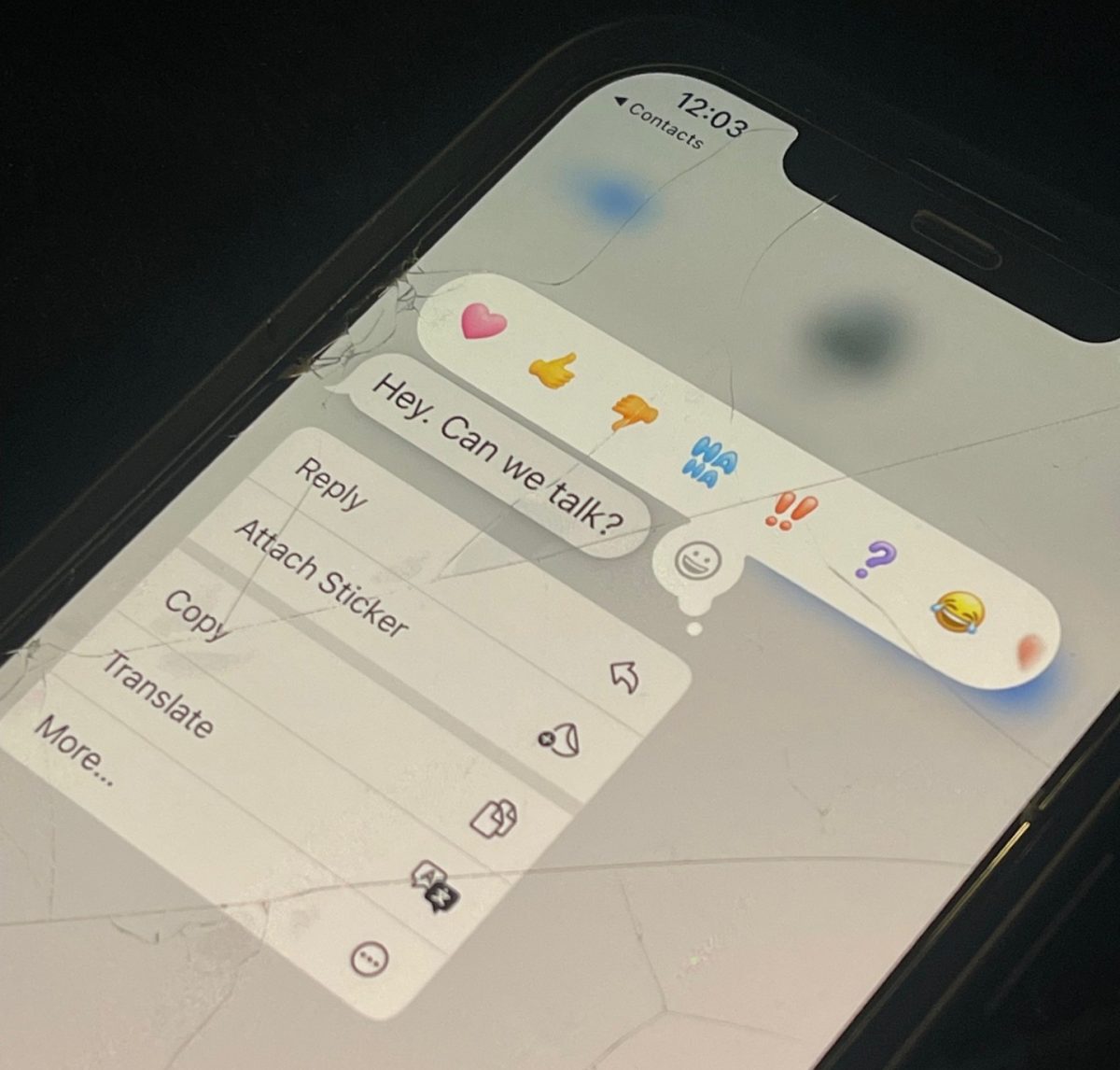
The digital age has reshaped how humans communicate, bringing in instant, multi-channel platforms, such as social media and instant messaging. This opens the door to real-time text messages, voice and video chats. These tools can assist in global connection and community building. Yet, loneliness is at a record high.
“We have different experiences, but I’ve noticed a tremendous loss in shared experiences because we don’t come together, and we’ve not all seen the same things. We’re not listening to the same stuff, we’re not all seeing the same movies or playing the same games. And so I feel that disconnect, that we don’t have that shared culture anymore.” -Dr. Shane Toepfer, Assintant Professor of Communications at the University of North Georgia
Throughout history, communication has been central to human survival and crucial societal development. Cooperation, information sharing, and skill transmission allowed early humans to thrive. Humans have been communicating with one another since the dawn of time, evolving from the origin of speech and writing systems, including the printing press, telegraph and telephone. Today, the internet and mobile devices have ushered in a new era- one that compresses distance, time and attention into the palm of a hand.
As digital communication becomes a more common platform, one must question if technology has enhanced the ability to connect or weakened it.
“We have been through a very divisive time. With that said, I think the way forward for all of us, no matter what our politics are, is through coalition and through community. And I think these platforms can do and have done tremendous work in bringing people together,” said Dr. Shane Toepfer, assistant professor in communications at the University of North Georgia.
“Unfortunately, a lot of this bringing together has been some of the worst aspects of our society. Because it can function in that capacity, I think it can also function in the exact same way in a more productive and supportive and kind world,” said Toepfer.
Communication has always evolved to meet populations and cultural shifts. According to Digital 2026: Global Overview Report by DataReportal (pages 60 and 382), as of October 2025, sources find that there are 5.66 billion social media identities worldwide and 6.04 billion internet users. That means that nearly the entire connected world participates in digital interaction daily.
Access through the digital age has led to a transformation in human interaction and a shift in communication norms. With the turn from face-to-face communication, humans have begun to adjust to brevity, curated personas and algorithm-driven identities. Miscommunication, once buffered by tone and body language, now relies heavily on fragmented text, emoticons and rapid-fire exchanges.
Communicators must learn to adapt to this new era. Without the in-person connections and physical presence, today’s “encoders” must rely on concise strategies to maintain clarity in their communication to keep credibility and comprehension. The communication tools have advanced, but the challenge remains understanding one another.
The power digital technology has on connection or isolation may depend less on the platforms themselves and more on how they are used. Anonymity is one of the features digital technology provides, and a common feature users take on. Online anonymity offers a sense of protection for vulnerable users, allowing these people to share experiences they may not feel safe expressing in person. But it also removes social accountability.
“You feel anonymous, you’re protected by that screen and a username and people feeling emboldened to say horrible things to each other,” said Toepfer. “What shocks me is that it’s become sort of the preferred space to engage. And to be honest, I don’t think that’s beneficial, because of the fact that people are emboldened to be their worst selves.”
A 2024 study reinforces this pattern. An article in Cyberpsychology: Journal of Psychosocial Research on Cyberspace examined social media users and found that perceived anonymity was significantly correlated with higher levels of cyber aggression. The researchers found that even when a platform is not technically anonymous, the feeling of being unidentifiable is enough to increase hostile behavior. Findings such as these support that when users believe they cannot be identified, screens blur the distinction between private and public space, allowing users to express thoughts they would not say face-to-face.
Communication continues to change and evolve, but does technology and the digital age enhance the ability to connect or weaken it?
The answer may depend on an individual’s usage, whether it can be a bridge or a barrier to connection. While platforms have the possibility of allowing harmful behavior, they can also bring together communities, collaboration and shared understanding.
Communication has a way of adapting to constant cultural shifts. Whether the digital platforms become instruments of connection or sources of further division will depend not on the technology itself, but on the people using it.
Sources
DataReportal – Digital 2026: Global Overview Report
https://datareportal.com/reports/digital-2026-global-overview-report
Cyberpsychology: Journal of Psychosocial Research on Cyberspace – “Exploring the Effects of Personal and Situational Factors on Cyber Aggression” (2024)
https://cyberpsychology.eu/article/view/35063