




An examination of dining and support services at the University of North Georgia’s Gainesville campus found that students with celiac disease face limited safe food options and no clear point of responsibility for assistance. For students with celiac disease and other dietary restrictions, every meal comes with risk. At UNG Gainesville’s campus, that risk is compounded by a dining system that advertises flexibility but often falls short in practice and ability to aid those with restrictions.
In reporting this story, attempts to clarify what support systems exist for students with celiac disease revealed additional gaps. When contacted, UNG Student Health Services claimed that they do not manage chronic dietary conditions like celiac and referred questions to Student Accessibility Services. However, Student Accessibility Services also claimed that they typically do not handle conditions like celiac in the context of dining and directed inquires back to Student Health Services.
The director of Student Health Services at UNG Gainesville was also contacted to provide information but has yet to respond to the request.
The result given was a loop with no clear point of responsibility. That lack of clarity raises concerns about where students are supposed to turn when their medical condition directly affects their ability to safely access campus dining.
“Students with CD are preoccupied with where they will be able to eat and the quality of safety precautions observed by food service staff at on-campus facilities which limits their available dining options,” according to a study from the Journal of the Academy of Nutrition and Dietetics’.
Students with celiac disease are protected under the Americans with Disabilities Act (ADA) and Section 504 of the Rehabilitation Act. These federal laws require universities and colleges to provide “necessary accommodations to students with disabilities, including access to safe, gluten-free food,” stated the Celiac Foundation’s Recommendations Handbook.
The UNG Gainesville’s campus dining hall states on their website, “We take into account your personal dietary needs and will make every effort to help you find food that fits your life.”
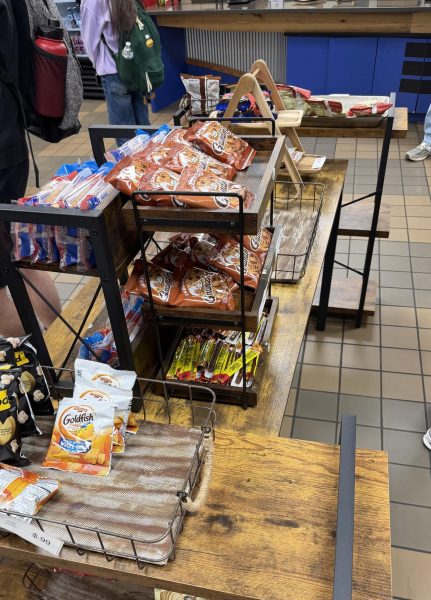
UNG also includes on their dining services website, that while they have a menu label in existence for gluten-free items, full safety cannot be promised as, “We rely on our supplier’s ingredient listings and may not be aware of ingredients contained in the food that are not listed on the container or packaging.”
For students with celiac disease, an autoimmune disorder triggered by even trace amounts of gluten, that distinction is not minor. It can mean the difference between staying healthy and experiencing severe physical symptoms.
At UNG Gainesville campus’s Nighthawk Food Hall, menu labels currently on the menu include, “vegetarian,” “plant-powered” and “vegan.” Currently, no menu items are listed as gluten-free. Even when gluten-free ingredients are available, shared spaces such as grills, fryers and counters, introduce risks that cannot be easily navigated.
“It’s not just about having something labeled gluten-free. It’s about whether it’s actually safe and most of the time, you don’t know.” – Sarah Edwards, Freshman Health Informatics
This concern led to inquiry about how college students can acquire such accommodations on campus for dietary restrictions and celiac.
To get accommodations, it is true that it is up to the student themselves to reach out and provide information about their diagnosis and what support they may need. It was found that students, like Edwards, are unsure about where to go to obtain necessary accommodations. “I didn’t know that accommodations were even offered at this school.” Edwards said, “I haven’t heard of anyone that actually got special food for their dietary restrictions.”
While these challenges are real, they are not unique. Across the country, students with dietary restrictions report similar issues, such as, limited availability, inconsistent labeling and concerns about cross-contamination, especially outside of main dining halls.
In 2020, the University of Maryland student Hannah Smith filed a suit after, “repeated gluten exposures in campus dining led to medical harm and academic disruption,” reported one study, which outlined accommodations for celiac disease. This lawsuit resulted in a $200,000 settlement and enforced institutions to establish proactive systems to evaluate, document and respond to dietary accommodations.
In response to three lawsuits, all including colleges, institutions like the University of Illinois and Miami University have responded by introducing dedicated gluten-free stations or allergen-free kitchens. Others providing access to dietitians or specialized pantry programs.
At UNG Gainesville and Georgia College and State University, students say those kinds of comprehensive solutions are not always visible or accessible in everyday dining. “I never remember seeing anything marked gluten-free in the dining hall,” said Ashley Davis, GCSU Alumni. “My senior year they added an allergy friendly fridge but, it just had soy milk and gluten-free brownies in it.”
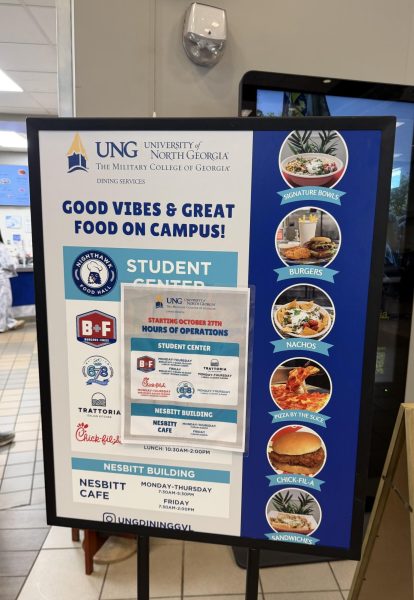
Dining officials on the UNG website maintain that accommodations are available for students who reach out. However, students argue that accessibility should not depend on constant self-advocacy, especially when it is unclear which campus office is responsible for providing support.
“The fact that it is legally required to have safe food options for those with celiac, makes this even more of an issue,” said Davis. “Especially when there is a lack of responsibility about where those students are supposed to go.”
Until state universities clearly define which office is responsible for providing support and ensures consistent access to safe, gluten-free dining, students with celiac disease are left managing the risks on their own with little guidance and no clear system of support.
Visit the National Institutes of Health (NIH) Celiac Disease Awareness Campaign