



Reusable water bottles were once the solution that fed multiple trends, such as the “save the turtles” movement, to reduce plastic straw waste. The shift of these trends through brands such as Hydro Flask, Stanley and Owala has impacted both the usage and production of these reusable cups.
“I’m a big fan of reusable water bottles! I’ve been using them since I was really young and I prefer them to disposable ones because they are both cheaper and better for the environment in the long run.” – Maddie Blanchard, Senior, Ceramics and Textiles
Lily Carlan, a sophomore biology major and outreach officer for the Students of Environmental Awareness (SEA) club, said, “I believe UNG could do a better job at pushing reusable water bottles. They already did a great job implementing refilling stations at every water fountain, but I think pushing that idea further by advertising ones they sell or educating the community on the benefits of reusable water bottles through flyers, for example, would make a world of difference.”
Students on campus can utilize water bottle filling stations on campus. These stations are attached to water fountains on campus and have a counter tracking the total bottles saved by refilling. The true impact that reusable water bottles have on the environment and efforts to reduce waste.
“I have noticed through the media and personal observations that reusable water cups/bottles have boomed in popularity over the past few years,” Katie Tran, a Sophomore Biology major and Vice President of Activities for SEA. “I believe that they are a good alternative to reduce plastic or paper cup waste; however, I do believe that in recent years, there has been an overconsumption of these reusables that may be causing more harm than good. I think some people buy reusable bottles due to consumerism and aesthetics, but a lot get thrown away over time.

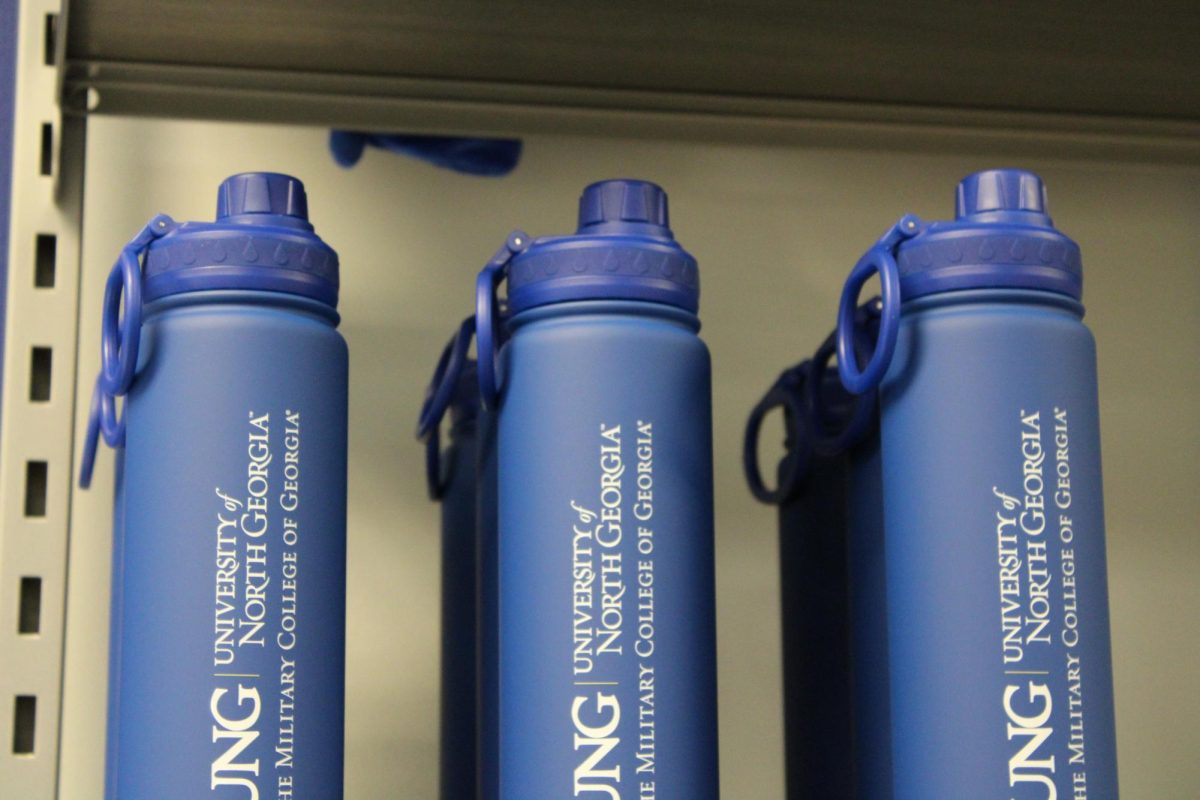
In the bookstore, UNG also has several styles of water bottles for sale, including branded insulated cups, plastic water bottles, and non-branded insulated cups.
UNG also offers branded water bottles to students as souvenirs or incentives to attend and participate in events. On the new UNG Connect website, UNG staff included a way for students to search for events tagged as having free food and items.
The most recent Earth Day events hosted on the Gainesville and Dahlonega campuses were hosted by UNG’s sustainability club, S.E.A., and other environmental-focused clubs at UNG. They offered several experiences for students featuring community projects, clubs and their environmentally focused initiatives.
Tran said, “For S.E.A. …we have promoted using sustainability options for Earth Day. Examples of this include reusable water bottles, cotton tote bags, and cotton pencil cases. I think for the upcoming semesters, we could improve on reaching out to more people about contributing more towards sustainability. We could set up more tabling events that help educate and give advice to students about important things to keep our Earth a cleaner and safer place.”
Reusable water bottles can also impact community connection at universities, as they help build common interests between students. In a study analyzing the effectiveness of stickers in commemoration and connection, researchers Ruth Frankenburg and Ayelet Oreg said, “Stickers have emerged as a powerful medium for visual communication and political expression in contemporary society, serving multifaceted roles that extend far beyond mere decoration.”
Frankenburg and Oreg found that the memorial stickers in this context “serve as a mechanism for expanding the concept of continuing bonds from the private to the communal level, creating a wider community of remembrance and solidarity.” This applies to student settings as well.
Blanchard said, I’ve always felt like it’s been a fun way to represent myself through its pattern or stickers. Especially recently, I feel like water bottles are a new accessory that’s meant to be a little vignette of the carrier’s personality.”