

According to the University of North Georiga’s Center of Undergraduate Research and Creative Activities website, “students who engage in research and creative activities as undergraduates have higher learning gains, such as problem solving and critical thinking skills, and increased self-confidence and independence.” Maintaining undergraduate research programs not only benefits students but the faculty mentors and the university.
Undergraduate research programs teach life stills outside of the classroom. One study published in the National Library of Medicine says, “Incorporating a research component along with a sound academic foundation enables students to develop independent critical thinking skills along with oral and written communication skills.”
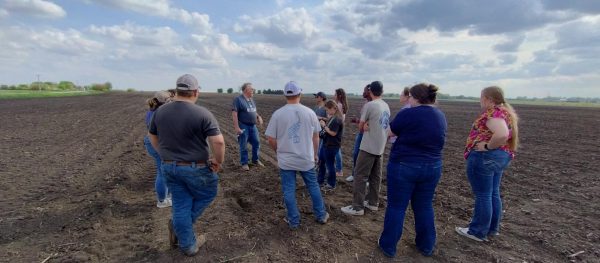
The greatest downfall to undergraduate research is the money that goes into it. UNG offers travel grants, collaborative mini-grants, annual research conferences and faculty research opportunities. Other specific majors have the opportunity to attend research conferences where students give poster presentations. CURCA Assistant Director, Diogo Penheiro, says, “There is something for everyone.”
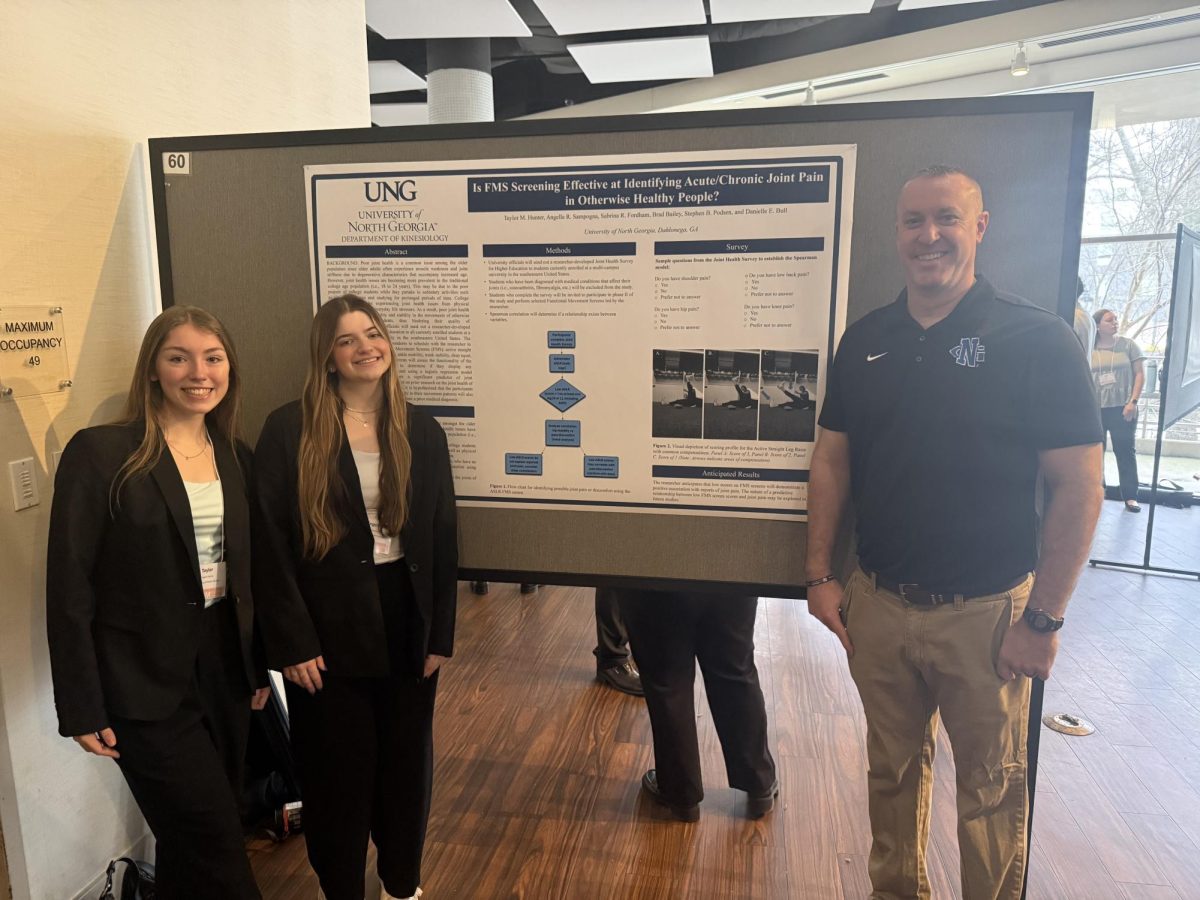
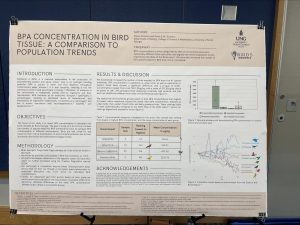
On Feb. 26-28, the Southeast Chapter of the American College of Sports Medicine in Greenville, South Carolina hosted UNG Kinesiology students with seven posters presented by UNG students.
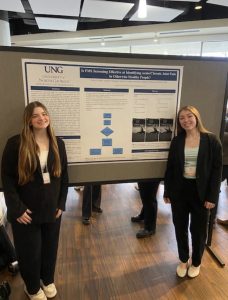
Kinesiology students, Angella Sampogna and Jacob Frantz, presented together at SCACSM. “I had heard about SEACSM, and was curious about it, but I had no idea how much fun it would be presenting,” said Sampogna.
UNG junior, Frantz, was thankful for the school’s resources and encouraged students to get involved. He said, “This event also provided the opportunity to connect with many other students and faculty in the field. It highlighted the wide range of opportunities available and reinforced the idea that there is always more research to be done.”
Sampogna said she was surprised by the amount of work that goes into a research project, “not only from myself and my research partner, but all of the faculty advisors as well.” The resources UNG has for research projects are “immense,” she said.”Formatting was also a surprise for me. Figuring out the layout of the information and having to make multiple drafts before the final product; it’s a lot of work.”
Frantz advises students to not overlook any details in both their research and their posters. He said, “Presentations tend to go much more smoothly when you fully understand the topic and can confidently explain even the small details.”
Samponga opened up about how even though this was her first time presenting, she felt like she was set up for success. “My biggest takeaway would be how grateful I am to have been a part of this convention and this research.” Sampogna said,” Collaborating and building a morale with my UNG Kinesiology faculty and students has made me so grateful to be a part of UNG’s Kinesiology department.” She said, “I also learned so much from the convention from the other amazing research projects that were presented. Research may sound intimidating, but it is very fulfilling.”
“Trust yourself and be confident in the work you have done and you’ll be fine. It can be intimidating, due to the size of the event, but everyone there is curious and wants to learn, so no need to be afraid!” -Angella Sampogna, Kinesiology, Junior
Samponga’s and Frantz’s research stemmed from the growing popularity of GLP-1. Samponga said, “The goal of this proposal was to compare the usage and effects of a GLP-1 transepidermal patch versus an injection. How would these different pathways affect the person, or in our case women, taking GLP-1?”
“Regarding our research, I would like our audience to feel more compelled to understand new forms of medication, their effects and just how impactful they can be.” Sampogna mentioned that technology and medicine are progressing quickly. She said, “As well as different modes of contracting that medicine. Everyone should be on the lookout for these new advancements!” She said, “Due to this popularity, many people have questions regarding GLP-1, its effects, and its usage, including myself.” Samponga mentioned that she was thrilled to be a part of the research and “jumped at the opportunity.”
Frantz said, “GLP-1 has grown rapidly in recent years, but there is still a significant amount of research to be done. The goal of this project was to explore alternative options that could improve accessibility for a wider range of people.” He said, “During the research process, gaining a deeper understanding of physical diffusion was especially interesting, particularly when comparing it to subcutaneous injections and oral supplements.”
UNG’s CURCA is always ready to talk to students who are interested in undergraduate research. Students can contact them here.
There is also a list of faculty who want to mentor and get involved in research that is available to students.
The upcoming Faculty Undergraduate Student Research poster presentation will be on July 23. It is free and open to the public and will be hosted in the Dining Hall Banquet Room in Daholonega.
CURCA says, “Good problem solving and critical thinking skills are highly valued in today’s workplace – no matter the field of study you decide to pursue.”