



Students at the University of North Georgia’s Dahlonega campus are raising beetles that play a role in protecting the Eastern Hemlock, a tree species under threat across the Southeast.
The endangered Eastern Hemlock tree is a keystone species. That means it is crucial to the biome. Many species of wildlife rely on their branch cover for protection and on the trees’ roots to prevent erosion along waterways.
Since the 1950s, a parasite called the Wooly Adelgid has been killing Eastern Hemlock trees.
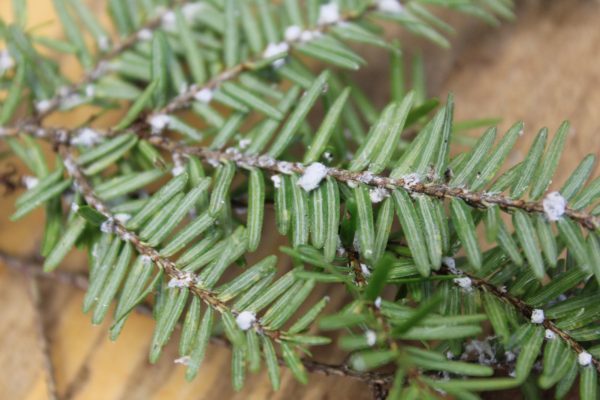
The Wooly Adelgid is from the Osaka region of Japan. It is an invasive bug that feeds off the natural sugars of the Eastern Hemlock, stealing its direct food supply. Over 70% of Eastern Hemlocks in the southeast are infested.
People noticed and started taking action.
Stacie James, UNG Environmental Leadership Center program coordinator, oversees the beetle lab, where students are raising beetles to eat the parasite and save the Eastern Hemlock.
She says Robert Fuller, a retired UNG professor, had the idea to start the lab, which he modeled after Young Harris College’s beetle lab.
“He wanted a way to be able to do predatory beetles here at UNG and collaborate with Young Harris and add to this fight against this bad bug affecting this riparian dominant species,” says James. “He kept speaking about it, talking about it, and then he spoke at one of the right events, and a funding partner was there. Amazing. And so next thing he knew we had funding.”
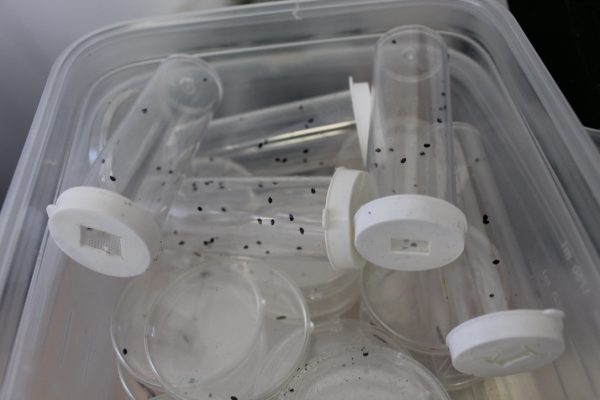
In the lab, students raise Sasajiscymnus tsugae, also called the ST beetle. These beetles feed exclusively on on the Wooly Adelgid.
“We can’t bring something over that’s a generalist predator. We can’t work with something that’s gonna impact another thing,” James says.
This tiny beetle, which is about the size of a grain of rice, is the Hemlock tree’s best chance for survival, says James, but with thousands of trees infested, it’ll take a lot of beetles for these trees to have a fighting chance.
“It’s a lot of work,” James says, “What I need that makes it all possible and what’s made it successful for, you know, 20 years now almost, is students. They are the bread and butter of everything we do.”
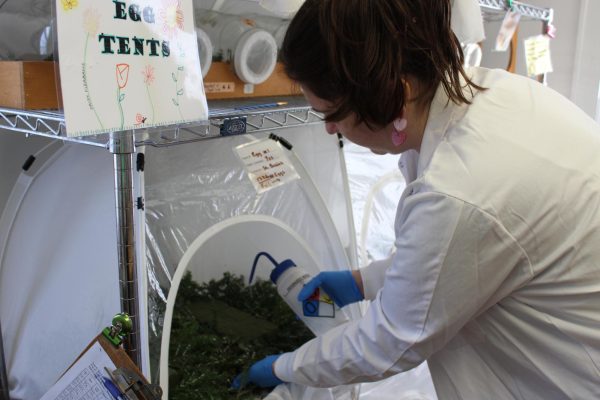
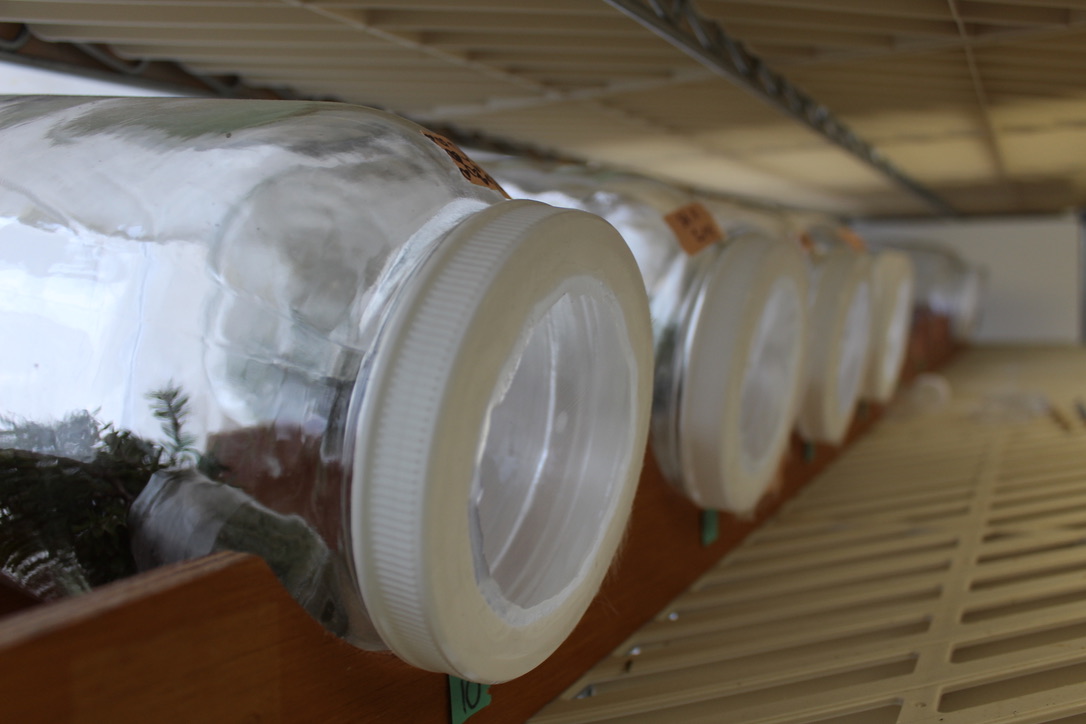
Students show up every day to assist in the beetle lab, participating in the care and keeping of the beetles, including feeding them twice a week and recapturing escaped beetles.
“I can’t do it without the students,” James says. “It’s the middle of their semester, they’ve got finals, they got everything going on and they’re still coming in and doing jar turnovers.”