





The Gathering at South Forsyth is coming to Metro Atlanta, but with any new project comes a multitude of downsides. The Georgia 400 Highway, running from Atlanta to Forsyth County, has undergone many changes, including road expansion and the construction of exits. There is extensive housing development around tree-lined highways, business and office complexes have been expanding and the annual volume of vehicles has increased. What started as a commuter road that connected North Georgia to Central Atlanta, State Route 400 has become a bottleneck, especially at exit 12, due to suburban growth and new projects.
These changes signal more significant transformations taking place in the area. In addition to an extensive highway development program, plans to extend the Metropolitan Atlanta Rapid Transit Authority’s services beyond Atlanta are now coming to fruition, promising both advantages and doubts about their functionality.
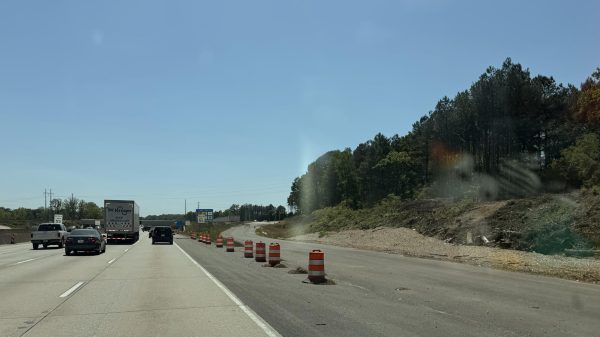
Crews have begun construction on SR 400, adding new express toll lanes intended to keep traffic moving even during peak hours. The lanes will stretch from the North Springs MARTA station to Exit 12, carving through one of the fastest-growing areas in the state. For drivers willing to pay, the lanes offer a faster, more predictable commute. For everyone else, the hope is that siphoning off some traffic will ease congestion in the general lanes.
There is more to consider, as part of reconstruction work the current capacity of SR 400 was lowered, and its traffic patterns were altered. Even though faster travel will be possible, the cost of using these lanes could be unaffordable for many commuters. The construction of express lanes creates a mobility hierarchy where saving time goes hand in hand with paying money.
Meanwhile, the transit authorities are working on changing the movement pattern along the same stretch of road. As opposed to extending the heavy rail line operated by MARTA, the project will build a toll-free Bus Rapid Transit network along the highway route, reaching the Windward Parkway area around Exit 12. The emphasis is on minimizing stops, accelerating loading and unloading as well as the ability to use the newly created express lanes.
“Traditional funding for transit projects comes from the Federal Transit Administration and local funding. Currently, there is not sufficient transit funding for a heavy rail transit solution. Georgia Express Lanes are considered transit lanes. Express Lanes Transit improves existing transit operations and performance, provides more reliable trip times and promotes transit-oriented development. The SR 400 Express Lanes project will support MARTA’s Bus Rapid Transit or ‘ELT’ in the proposed managed lanes,” said Kyle B. Collins, a representative for the project. Collins also pointed to the project’s information website.
The convergence of the two projects is deliberate, and they should be understood as parts of an interconnected effort. The buses will share the managed lanes with automobiles, thus allowing transit passengers to avoid traffic jams without constructing costly new rail routes. It can be considered a reasonable compromise between driving and using public transport along the same route.
“From a practical standpoint, the two elements show a certain imbalance. While the highway expansion project has secured funding and is in progress, the transit project is still tentative and any further development will depend on additional financing and political backing,” said Collins. “The corridor is primarily built to accommodate vehicles and only secondarily for transit.”
The situation becomes rather pressing for drivers who are using SR 400, especially when traffic is at its peak. The journey that used to take 30 minutes lasts more than an hour. The population of Forsyth County in 2015 was 211,368, and increased to 282,805, and Fulton County increased from 1,005,775 to 1,098,791. The population increase in North Fulton and Forsyth counties will result in the aggravation of traffic problems despite current road deficiencies. However, it is yet to be determined if the enlargement of roads will solve the problem, as the rise in the number of vehicles might worsen the issue. Collins says that “supporters of highway expansion argue that other choices are scarce and that expanding roads is worth exploring.”
As per this newsletter published by the Georgia Department of Transportation, the project is expected to be completed by 2031 and cost approximately $11 billion.
The future of SR 400 will include faster highways, a proper public transport system and the ability to manage further growth. With construction already beginning, residents should remain optimistic that this new project can ease their frustrations with the highway and incoming business projects.