




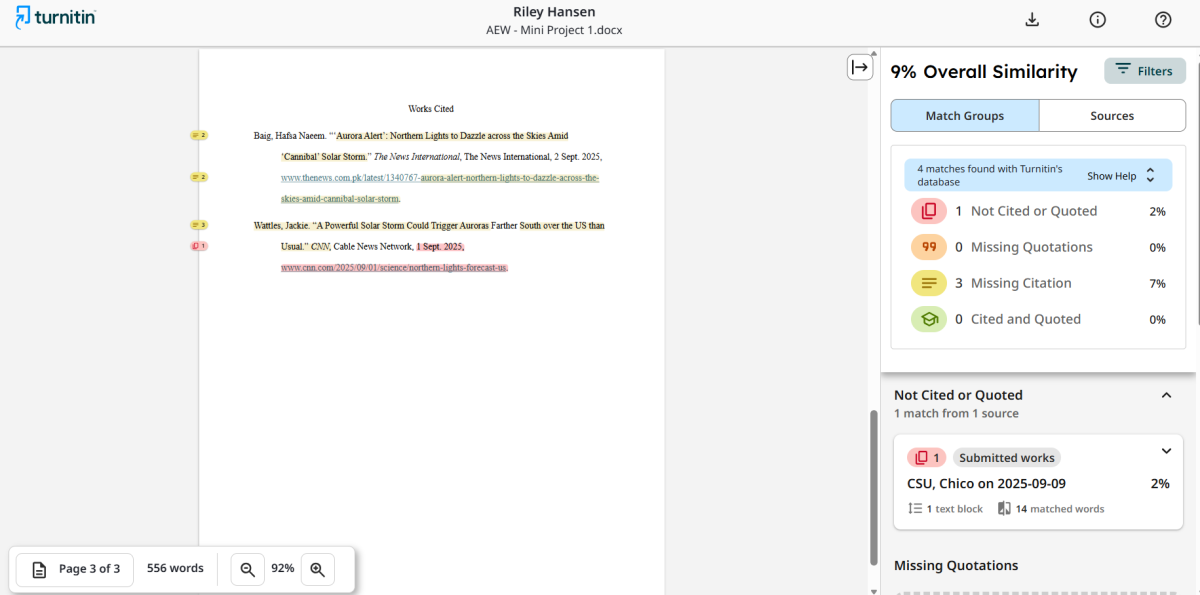
As more universities update their AI policies to include tools like TurnItIn to grade students’ work to check for plagiarism, many educators are questioning the ethics behind the use of these tools to grade student works. Not only can these databases be considered unreliable, but they also add these student works to the large language model database without their consent or knowledge.
False positives and negatives are not the only concern when using programs to detect for AI usage, but also student rights to their own work. Plagarism.com, a linked page on TurnItIn, states, “The expression of original ideas is considered intellectual property and is protected by copyright laws, just like original inventions. Almost all forms of expression fall under copyright protection as long as they are recorded in some way.” There has been no limitations placed on AI systems in regards to their use of intellectual property due to the systems not having the human capacity of creation, only replication.
Large language models, the databases behind AI services and tools such as ChatGPT and Grammarly, utilize public works to optimize their systems output. In the eyes of these systems, any media not blocked by a paywall is considered fair game, with some of this data being collected without proper fact checking or research. Many higher education professionals have begun only publishing their research, books and papers behind paywalls to protect it from being used by these databases.
“I see more and more suspect writing… however, I don’t use AI detectors because they may be unreliable and return false positives and false negatives. I have used TurnItIn to spot more ‘traditional’ cases of plagiarism. Papers written with large language models are similar to papers written by a student’s friend or family member: they may be suspect, but it is difficult to prove from an academic honesty standpoint. “- Jim Shimkus, English Professor at the University of North Georgia
Even though professors do not want their work used in these models, student work is often left unprotected from its scrutiny. When student work is put into large language models without their knowledge, to test for plagiarism and use of AI, they lose the right to their intellectual property, meaning that their words and research will come back as plagiarism if used anywhere else. This can get students in trouble with the academic integrity policy if they reuse parts of their research or words in future assignments.
Mona Birjandi, author of “Detecting Fraud, but at What Cost? Applications of Fraud Detection Algorithms: The Good, The Bad, and What to Watch Out For” said, “TurnItIn, a company with advanced AI writing detection technology that claims to distinguish between AI and human-written text, reported that its AI detection tool might incorrectly flag one out of every 100 human written documents as AI-generated.”
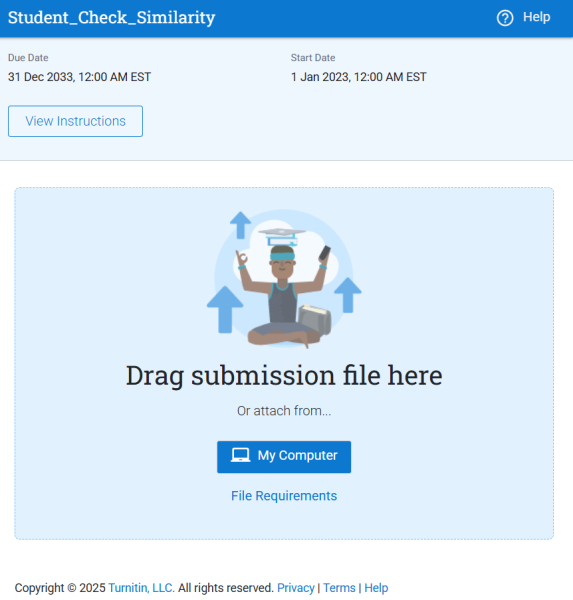
During this past semester, UNG imbedded TurnItIn resources into D2L, offering students the ability to check their work for similarity, and for professors to check for plagiarism and grammar mistakes directly from the course page. Many professors also include statements in their assignments and syllabi regarding the use of ChatGPT and Grammarly for writing-based content courses. There have been mixed feelings on the implementation of AI into content of the courses, with some utilizing it to write course descriptions or for class use in assignments. Meanwhile some do not want it to be included in their content.
Shimkus said, “I do not knowingly use any large language models for any personal or professional tasks. I have not yet experienced any push to include them in my courses, which are overwhelmingly first-year composition courses. Since our syllabi are public now, anyone can read our course objectives and see that they do not mention the use of large language models, and in fact, list a number of skills that students are expected to learn by doing their own work.”
This topic is frequently discussed by faculty at UNG, with many professors sharing how these databases have impacted the level of student writing seen. A student led panel hosted by UNG English professor Miriam Moore during the spring semester opened the floor to English students and professors, allowing them to share their feelings on implementing it into course content.
Professors were advised not to use TurnItIn to check for plagiarism during this recent finals season via email, due to an increased output of false positives.