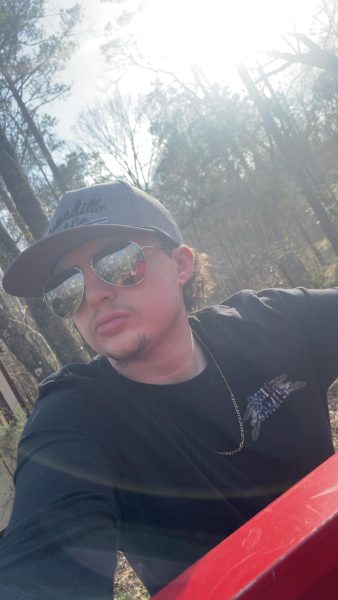


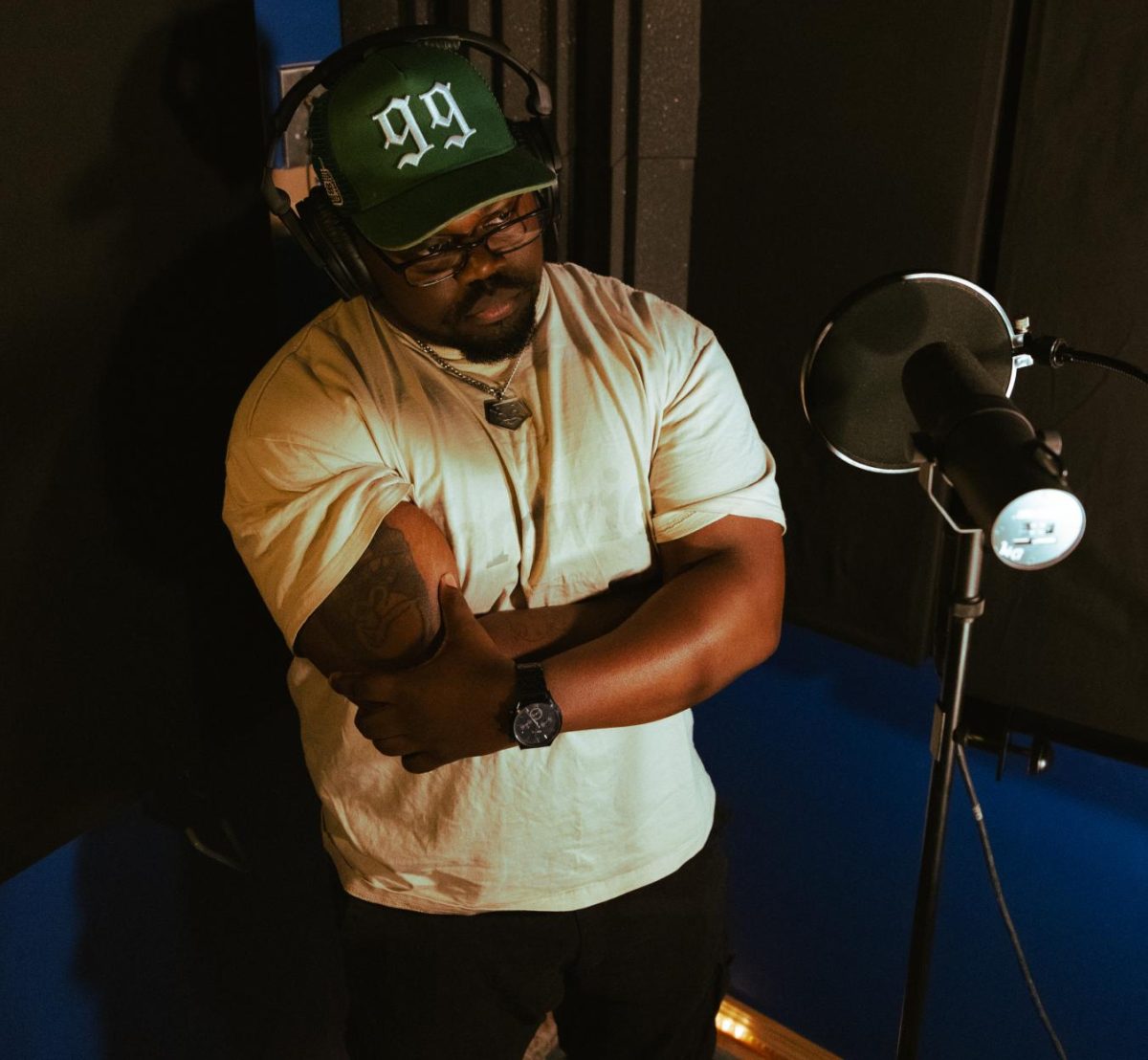
When “SadBoy In A SadWorld” Sandeondris Bridgeman talks about music, he is not talking about fame, streams or algorithms. He is talking about life. The 24-year-old accounting major, now a junior at the University of North Georgia, carries a suitcase of stories.
Bridgeman grew up in Tunica, Mississippi, where the Delta blues drifting from his mother’s kitchen radio shaped him long before he ever set foot in a studio. “I’d just listen to the beat,” he says. “Even if I didn’t know the lyrics, I’d start writing a remix or a rap to go along with it.” That instinct, to hear rhythm before words, became the foundation of a craft he’d later refine in an unexpected setting: the United States Marine Corps.

Stationed in Hawaii as part of a Combined Anti Armor Team (CAAT), Bridgeman recorded three albums during his four years of service. Music became a way to connect with his fellow servicemen and women. Those moments stayed with him.
“Whenever I shared my music with people in the service, they always shared a story with me, like I’d understand because of the shared experience.”
– Sandeondris Bridgeman, junior Accounting major at UNG
When that contract expired, he had a decision to make. The military was stable, but it was not his calling.
“I knew music was my real goal,” he says. “I missed plenty of opportunities because of the restrictions in place.”
The GI Bill pays for his education now, but Bridgeman’s pursuit of music remains constant-shaped by principle more than profit. He even turned down an opportunity to sign officially.

“They did a lot of stuff I didn’t believe in,” Bridgeman says. “Demonizing people because of their beliefs-religious, sexuality-whatever it was. That’s the opposite of what I stand for. I can’t stand behind somebody if I don’t stand for what they agree with.”
Instead, he has carved out his own way. Bridgeman is sharply critical of mainstream music’s obsession with glitz and glamour.
“Most music videos, it’s just people bouncing around, women, cars,” he says. “That’s not my music nor my vision. Doing something like that would cheapen everything I’m doing.” Authenticity is his code: “There’s no facades. I only rap what my reality is.”
That reality is grounded in giving more than taking. His latest project, CheesePie The Album, donated every dollar it earned back to fans through a raffle. He donated $50 each to three listeners.
He stressed the point, “I don’t want your dollars, I don’t want your money. I’m happy that you shared something with me, and I was able to share something with you.”

Bridgeman lives in Loganville with his wife and daughter and works to expand his presence on TikTok and Instagram, knowing it is part of the modern path for independent artists. His music is available on all major streaming platforms, but his message goes deeper than the numbers those platforms keep track of.
“Everybody likes to tell you how you should feel, what you should do,” Bridgeman says. “Everybody likes to tell you everything except what you are.” Through his music, he tries to counter that. “Most people get that dark feeling and isolate themselves because they feel alone. I don’t want that to be the case. We ain’t always gonna stay down for long, but sometimes you do get down… it’s all okay over here.”
Bridgeman’s mission: not the streams, not the spotlight, but the opportunity to remind someone out there that their story is worth hearing too.